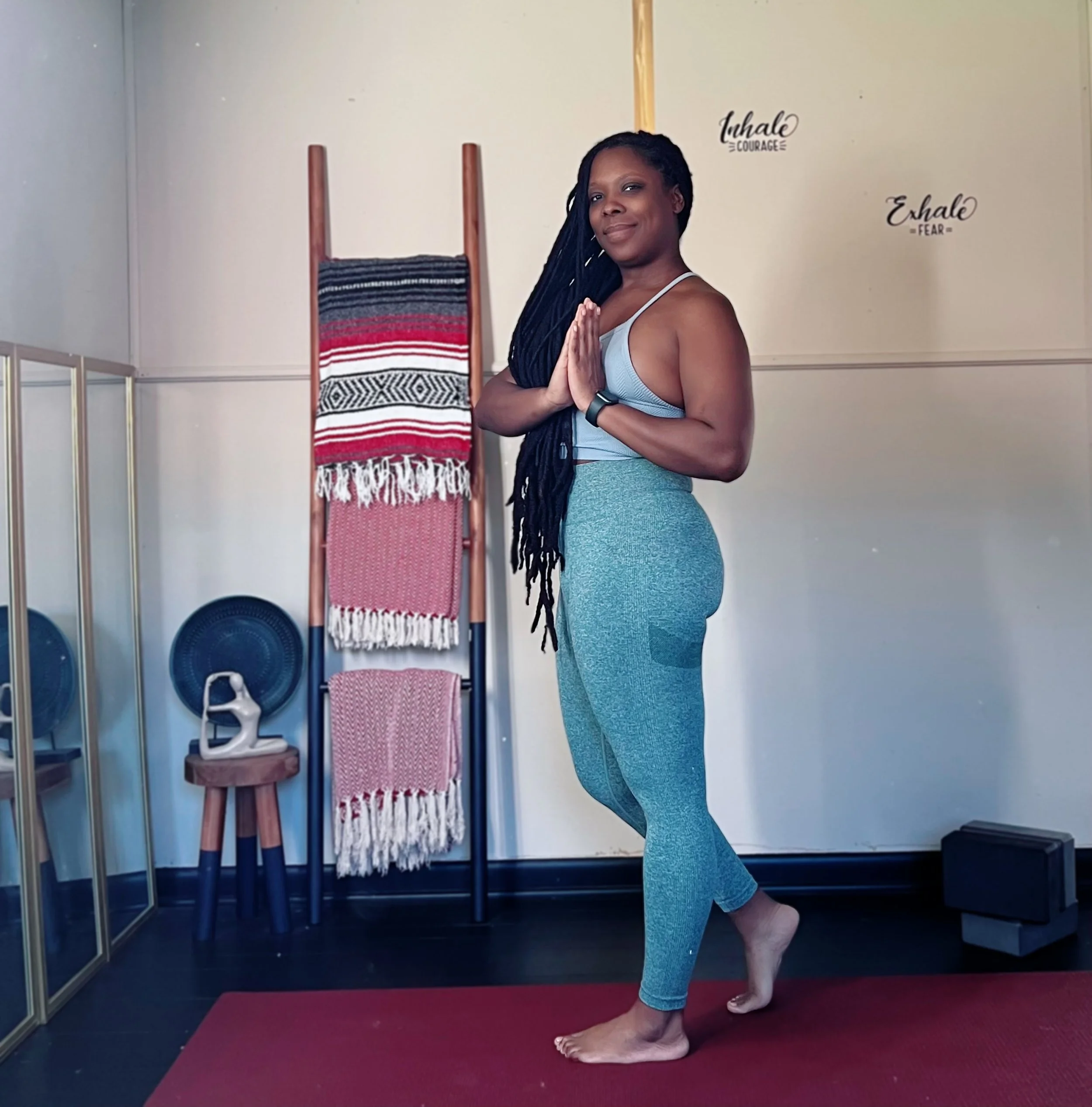
Consistency Without Pressure: A Yogic Approach to Discipline
Soft Discipline: How to Stay Committed to Your Yoga Practice Without Burning Out
There was a time when I thought discipline had to feel rigid.
Sharp edges. Early alarms. Forcing myself onto the mat even when my body whispered rest.
But yoga—real yoga—taught me something different.
Discipline doesn’t have to be harsh to be effective.
Consistency doesn’t require punishment.
And devotion? Devotion is soft.
This is where soft discipline lives.
What Soft Discipline Really Means
Soft discipline is the commitment you return to because it feels nourishing—not because you’re afraid of falling behind.
It’s choosing your practice with care.
It’s listening before pushing.
It’s honoring the seasons of your body, your nervous system, your life.
Soft discipline says:
I show up because I love how this practice holds me—not because I demand perfection from myself.
This approach is especially important in a world that already asks us to be “on” all the time. Yoga isn’t meant to be another space where we prove our worth. It’s where we remember it.
3 Gentle Ways to Stay Consistent Without Burning Out
1. Create a “Minimum Practice”
Let’s release the idea that a meaningful practice must be long or elaborate.
Your minimum practice might be:
5 conscious breaths
A single Sun Salutation
Child’s Pose with one hand on your heart
Legs up the wall at the end of a long day
When the barrier to entry is low, consistency becomes natural.
Showing up—even briefly—keeps the relationship alive.
Remember: something is always better than nothing.
2. Anchor Your Practice to a Feeling, Not a Goal
Instead of asking:
How strong do I want to be?
Try asking:
How do I want to feel when I step off my mat?
Grounded. Open. Softened. Energized. Safe in your body.
When your practice is guided by sensation and emotion, it adapts to you. Some days that feeling comes through slow, deep stretches. Other days, it arrives through heat and movement.
Let your intention be sensory, not performative.
3. Let Your Practice Evolve
You are not meant to practice the same way forever.
Your body changes.
Your needs change.
Your capacity changes.
Soft discipline allows evolution without guilt.
It honors rest as wisdom.
It welcomes curiosity over control.
Some seasons are slow and introspective.
Others are bold and fiery.
Both belong.
A Mini Practice Invitation
If you’re feeling disconnected or inconsistent, try this today:
Sit or lie down comfortably
Place one hand on your belly, one on your heart
Inhale through the nose for 4
Exhale slowly through the mouth for 6
Repeat for 2–3 minutes
Then ask yourself:
What does my body actually need right now?
Let that answer guide your movement—or your stillness.
A Loving Reminder
Your yoga practice is not a task to complete.
It’s a relationship to tend.
One built on trust.
On listening.
On returning—again and again—with kindness.
Soft discipline isn’t weaker.
It’s wiser.
It’s sustainable.
And it’s deeply powerful.
If you’re craving guidance, accountability that feels supportive, or a space where you’re encouraged to move at your own pace, I’d love to practice with you—whether in community, privately, or online.
Come as you are.
That’s always enough.
✨